
H-2A Visa
Home > H-2A Visa
H-2A Information for Agricultural Employers
A practical overview of the H-2A process, employer obligations, filing timelines, recruitment requirements, wages, housing, transportation, and compliance responsibilities.
The H-2A temporary agricultural worker program allows qualified U.S. agricultural employers to employ foreign workers for temporary or seasonal agricultural labor when there are not enough able, willing, qualified, and available U.S. workers to perform the work.
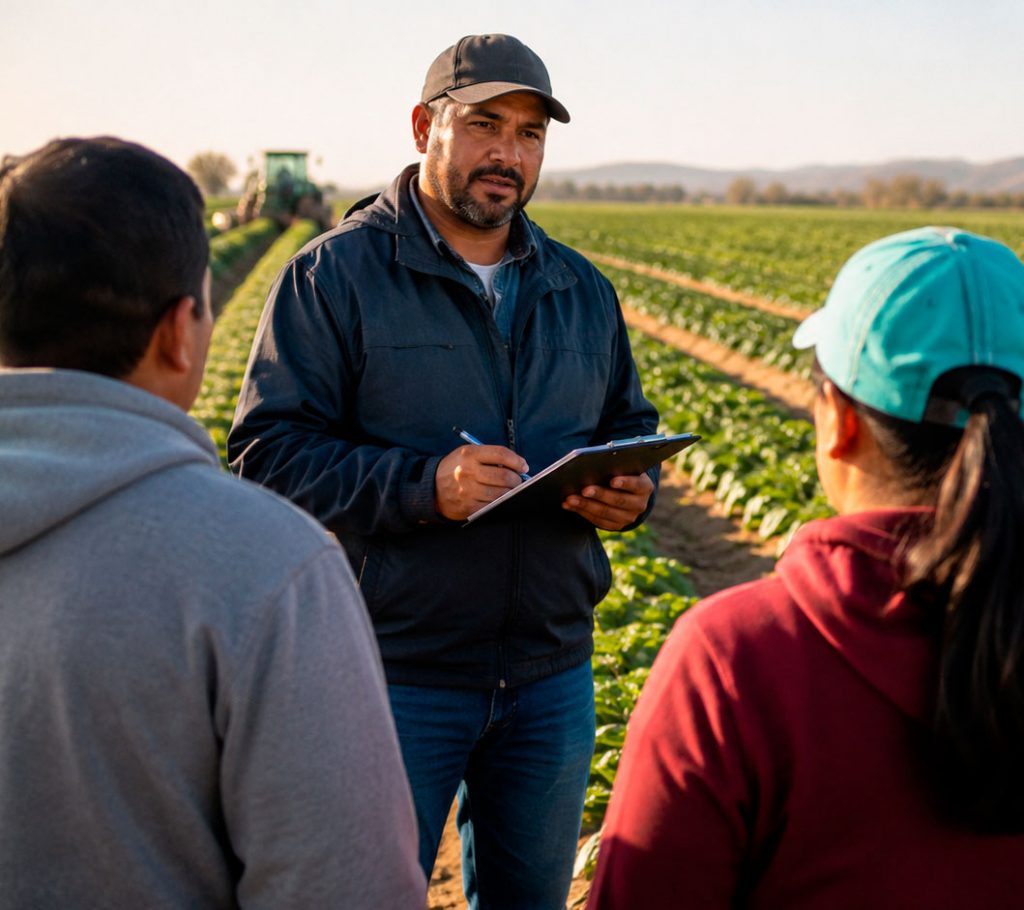

For agricultural employers, having the right workforce available at the right time can determine whether a season runs smoothly or becomes a serious operational challenge.
For farmers and agricultural businesses, the H-2A program can provide an important source of lawful seasonal labor. However, participating in the program involves much more than obtaining visas for foreign workers. Employers must comply with detailed requirements administered by the U.S. Department of Labor (DOL), U.S. Citizenship and Immigration Services (USCIS), and the U.S. Department of State.
The process is time-sensitive and the employer assumes significant legal obligations, careful planning should begin well before the anticipated date the workers will be needed.
Before beginning the process, you, the employer should evaluate issues such as:
☑️ Whether the work qualifies as agricultural labor or services;
☑️ Whether the employer’s need for the workers is temporary or seasonal;
☑️ How many workers will be needed;
☑️ When the workers will be needed;
☑️ Where the employees will perform the work;
☑️ What duties they will perform;
☑️ What qualifications are legitimately required for the positions;
☑️ What wage must be paid;
☑️ Whether compliant housing is available;
☑️ How transportation will be provided;
☑️ Whether the employer is prepared to meet the ongoing requirements of the H-2A program.
The H-2A Process for Employers:
The H-2A process involves several government agencies and multiple stages.

1. Preparing the Agricultural Job Opportunity:
The potential employer must carefully define the job opportunity, including the number of workers requested, dates of employment, job duties, worksites, wage, housing arrangements, transportation, and other terms and conditions of employment.
Job requirements should reflect the legitimate requirements of the position and must be properly disclosed and applied consistently.
The information included in the job order can become part of the employer’s legally enforceable obligations during the H-2A employment period.
2. Filing the H-2A Job Order:
An H-2A employer must submit the appropriate agricultural job order as part of the temporary labor certification process.
The job order generally contains detailed information regarding:
• Job duties;
• Wage rates;
• Period of employment;
• Work locations;
• Hours;
• Housing;
• Transportation;
• Meals or cooking facilities;
• Required qualifications; and
• Other terms and conditions of employment.
3. Temporary Labor Certification:
The employer must obtain a temporary agricultural labor certification from the U.S. Department of Labor before proceeding with the H-2A petition to USCIS.
The employer must demonstrate, among other requirements, that:
☑️ There are not sufficient able, willing, qualified, and available U.S. workers to perform the temporary agricultural work;
☑️ Employing H-2A workers will not adversely affect the wages and working conditions of similarly employed workers in the United States.
⏱️ The labor certification process is highly time-sensitive. Employers should begin planning well before the anticipated start date.

4.Recruitment of U.S. Workers:
Participation in the H-2A program does not permit an employer simply to bypass the domestic labor market and hire foreign workers.
Employers must comply with the U.S. worker recruitment requirements established by the Department of Labor. This may include accepting referrals of qualified U.S. workers, contacting certain former U.S. employees, maintaining recruitment records, and completing other recruitment activities required through the H-2A process.
Employers must also properly document the recruitment process.
This documentation can become particularly important if the employer is later audited or investigated.
5. Department of Labor Certification:
After the required procedures have been completed and the DOL determines that the statutory and regulatory requirements have been satisfied, DOL may issue the temporary labor certification. The certification allows the employer to proceed to the immigration petition stage.
It does not, by itself, authorize the foreign workers to begin employment or guarantee that individual workers will receive visas.
6. Filing the H-2A Petition with USCIS:
After obtaining the required temporary labor certification, the employer or other qualifying petitioner files Form I-129, Petition for a Nonimmigrant Worker, with USCIS to request H-2A classification for the workers.
USCIS then determines whether the petition satisfies the immigration requirements for H-2A classification.

7. Visa Processing and Arrival of the Workers:
Workers who require an H-2A visa generally proceed through the U.S. Department of State after the necessary petition approval.
The workers outside the United States will need to complete visa applications, attend consular processing when required, and establish their individual eligibility for the visa.
An approved labor certification and USCIS petition do not eliminate the worker’s individual visa and admissibility requirements.
Employer Responsibilities Continue After Approval.
Employers’ Responsibilities:
One of the most important points for agricultural employers to understand is that H-2A compliance does not end when the workers arrive at the farm. Many of the program’s most significant employer obligations apply throughout the employment period.
The Department of Labor’s Wage and Hour Division has authority to enforce H-2A worker protections and employer obligations.
1. Required Wages
H-2A employers must pay workers the wage required under the applicable H-2A rules. The appropriate wage depends on the job, location, and applicable wage methodology and may change over time.
2. The Three-Fourths Guarantee
The H-2A program generally requires the employer to guarantee employment opportunities totaling at least three-fourths of the workdays in the contract period, subject to the applicable regulatory provisions. This obligation should be considered carefully when determining how many workers to request and the length of the employment period.
3. Free Housing
Employers must generally provide housing at no cost to H-2A workers who cannot reasonably return to their permanent residence each day.
The housing must meet applicable federal, state, or local safety standards and must satisfy the applicable inspection requirements before workers occupy it.
4. Transportation
Employers have specific transportation obligations under the H-2A program.
These may include:
✓ Transportation between employer-provided housing and the worksite;
✓ Certain inbound transportation and subsistence expenses;
✓ Certain return transportation and subsistence expenses; and
✓ Compliance with applicable vehicle, driver, insurance, and safety requirements.
5. Meals or Cooking Facilities
Employers must comply with the H-2A requirements concerning food.
Depending on the arrangement disclosed in the job order, an employer may provide three meals per day subject to applicable rules concerning permissible charges, or provide workers with adequate and convenient cooking and kitchen facilities so that they can prepare their own meals.
6. Workers' Compensation
H-2A employers are required to provide workers' compensation insurance or equivalent coverage when required under the applicable rules, at no cost to the worker. Coverage must be maintained as required during the employment period.
7. Tools and Equipment
The employer must generally provide, without charge or deposit, the tools, supplies, and equipment required to perform the work when required by the H-2A regulations.
Recruitment Fees and Third-Party Recruiters
⚠️ IMPORTANT!: This is an area where employers should exercise particular caution. An H-2A employer may work with foreign recruiters or agents, but the employer cannot simply delegate the process and ignore what recruiters are doing.
The program prohibits charging workers certain fees associated with recruitment or obtaining H-2A employment. Employers may face compliance issues when recruiters, agents, or other representatives acting on their behalf improperly charge workers for access to H-2A jobs.
Employers should carefully evaluate recruiters, use appropriate written agreements, and establish procedures designed to prevent prohibited recruitment fees.
The H-2A program requires careful documentation from the planning stage through the completion of the workers’ contracts.
Employers may need to maintain records concerning:
- The H-2A job order;
- Temporary labor certification;
- Recruitment of U.S. workers;
- U.S. worker applicants and referrals;
- Reasons for lawful rejection of applicants;
- Payroll;
- Hours worked;
- Wage statements;
- Housing;
- Transportation;
- Workers’ compensation coverage;
- Recruiter and agent agreements;
- Reimbursements and expenses;
- Information provided to workers; and
- Changes occurring during the employment period.
Proper documentation can become critical if the Department of Labor reviews the employer’s compliance.
Legal Guidance Matters:
An H-2A case is not simply a visa application. The employer is making representations to federal agencies and agreeing to comply with specific employment conditions.
An inconsistency between what was represented in the government filings and what actually occurs during employment can create compliance problems.
Professional legal counsel can assist an employer in identifying these issues before the filing is submitted, when there may still be time to correct them.
Have questions about the H-2A process?
Contact me directly at patricia@i-usa-s.com to discuss your questions and next steps.
Important Disclaimer to potential employers:
The information on this page is provided for general informational purposes only and is based on current information from official sources, including the U.S. Department of Labor, U.S. Citizenship and Immigration Services, U.S. Department of State, and applicable federal laws and regulations.
H-2A laws, regulations, government procedures, wage requirements, filing fees, and policies are subject to change. Every agricultural operation and H-2A case presents different circumstances.
The information on this page does not constitute legal advice for any particular employer and does not create an attorney-client relationship.
Planning to Hire H-2A Workers?
The H-2A process involves strict deadlines, detailed filings, and ongoing employer obligations. Proper planning from the beginning can help reduce delays, compliance issues, and unexpected problems during the season.
Immigration Law USA Solutions can guide agricultural employers through each stage of the H-2A process.